
100 Mornings
Morning · 30 seconds
Three breaths in the morning. The sun clears the ridge, and one of a hundred dots lights up.
 Ki

No length, no goal
Sounds of Japan · Ukiyo-e · ZazenComing soon to iPhone
The Quiet Promise
Ki is a meditation app that believes the less time you spend looking at it, the better.
No streaks, no red badges, no nagging notifications. A day you rest is never held against you.
Ki never sets how long to sit, a goal, or a promised benefit. Why you sit is yours.
Time spent away from the screen, sitting, matters more than time spent looking at it.
No scores, no rankings, no comparing with anyone. Your record is only a trail of where you have walked.
No ads. Nothing tracked. Your record stays on this device.
Just Sit
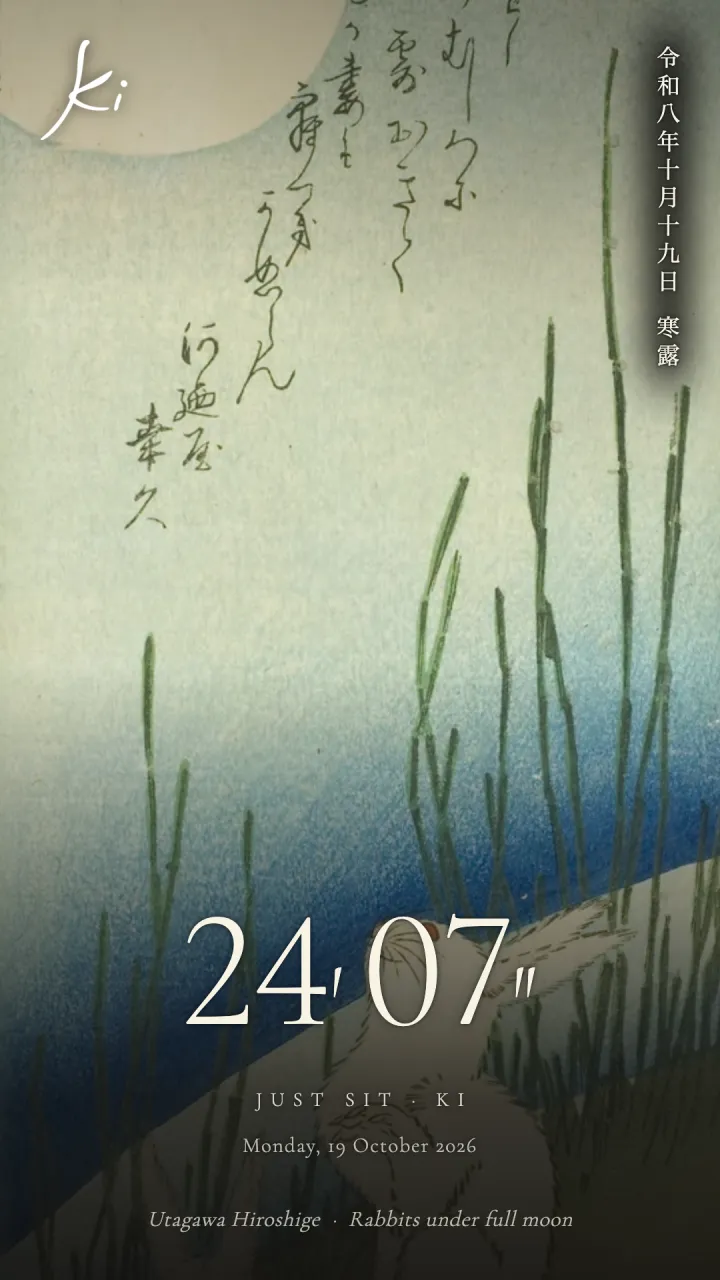
Place your phone face down and a bell rings three times to begin. Pick it up, and the sit ends there. No button to press, no time to set.
The day’s sheet
Afterwards the day’s ukiyo-e, the time you sat, the date and the season of Japan’s 72-season calendar become one sheet. No streak, no praise.
On a phone, simply lay it face down. On a computer, press the button: the screen goes dark and a bell rings three times. Press again, or pick the phone up, to end.
Sounds of Japan
Most of Ki’s sounds were recorded by us, on foot, across Japan: birds in a Sapporo shrine forest, a hot-spring field, rain on a shrine approach, waterfalls in a gorge, waves and wind by the sea. Each sit puts you inside the air of a place.
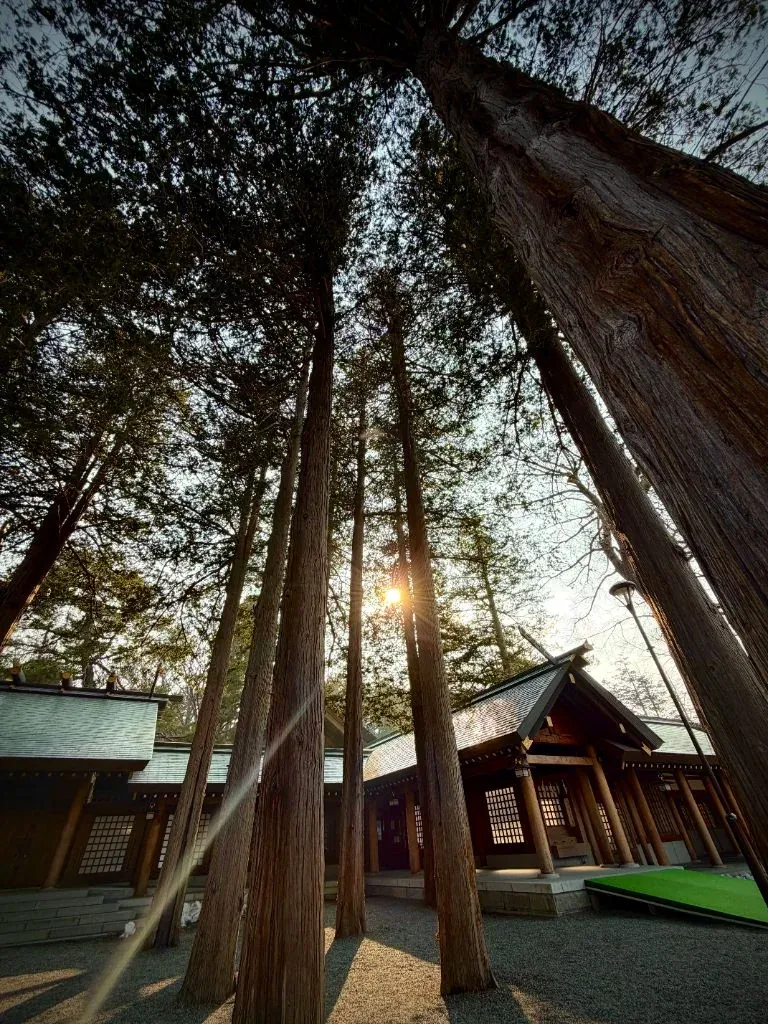

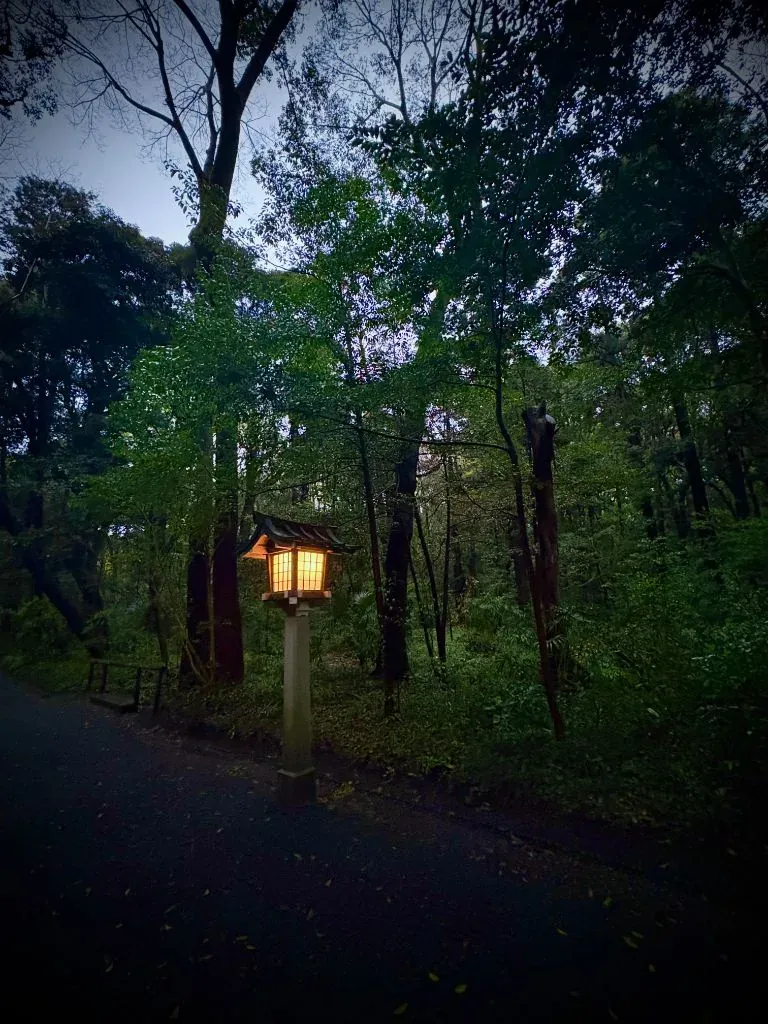
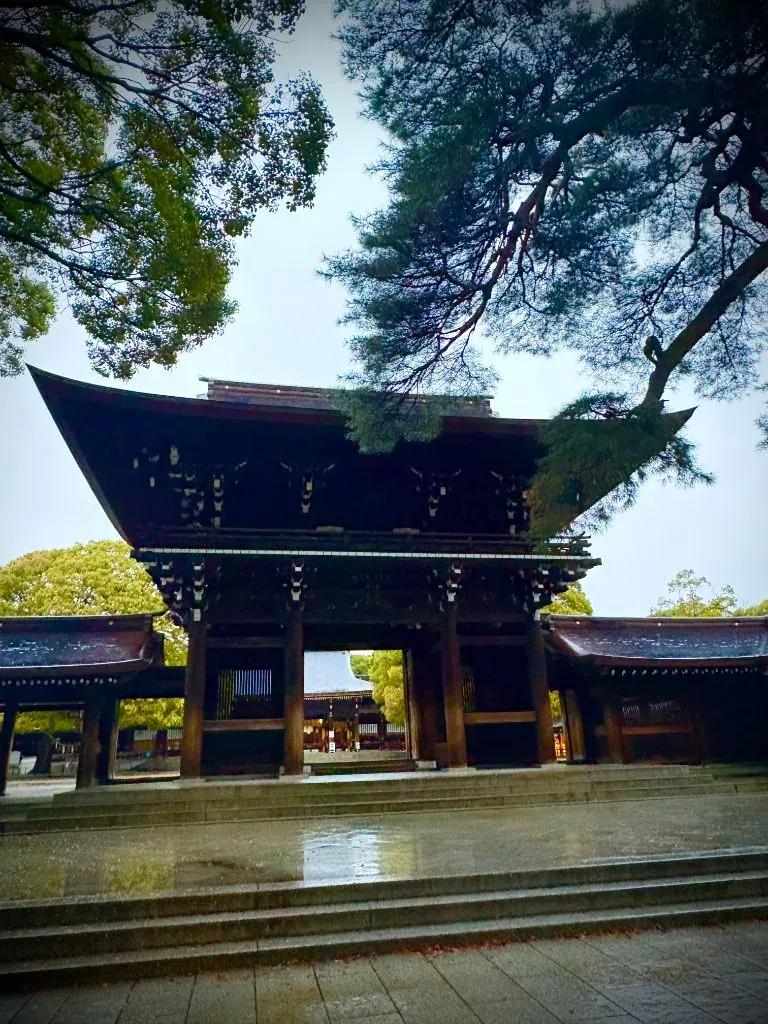






Ten places — photo and sound from the same spot. Press ▶ and it rises gently from silence, one at a time.
Omikuji
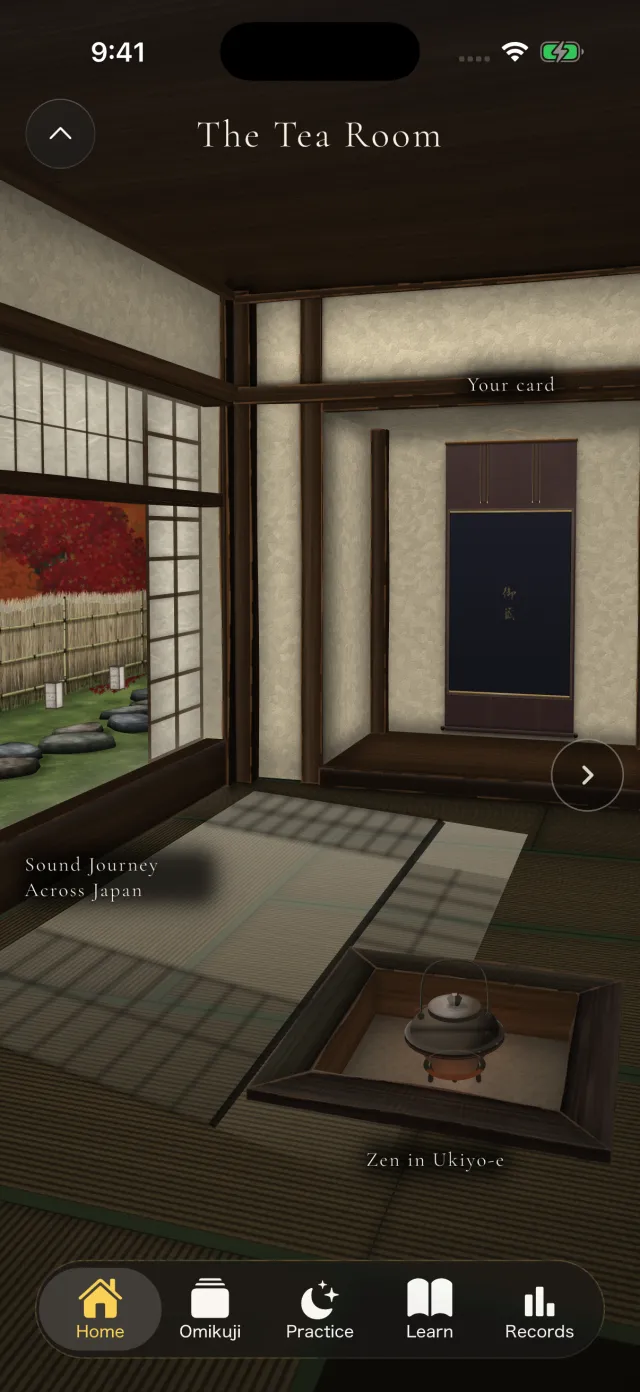
Once a day you walk the path to the temple gate, set a coin down quietly and shake the box. What comes out is no fortune — just one ukiyo-e and one Zen phrase. The slip always reads 日日是好日: every day is a good day.
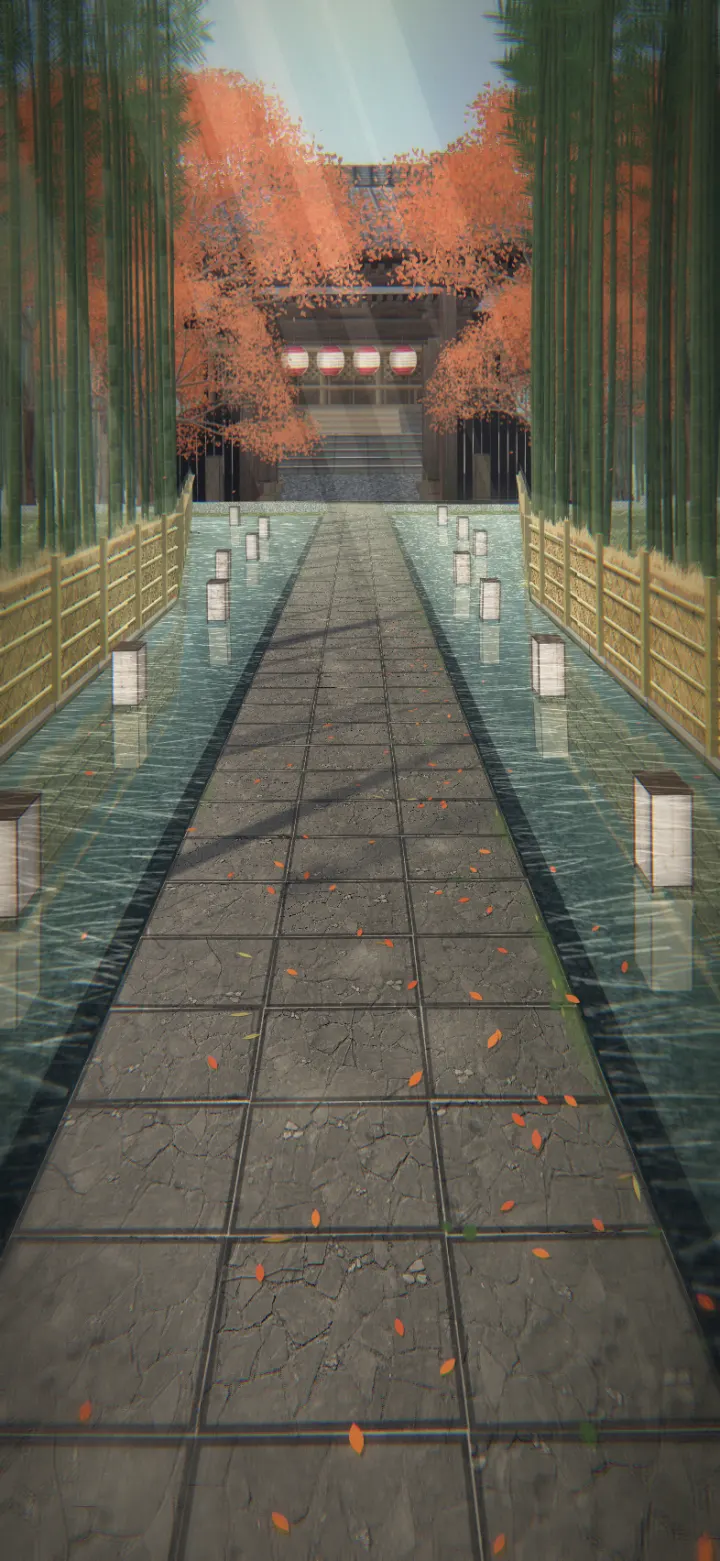
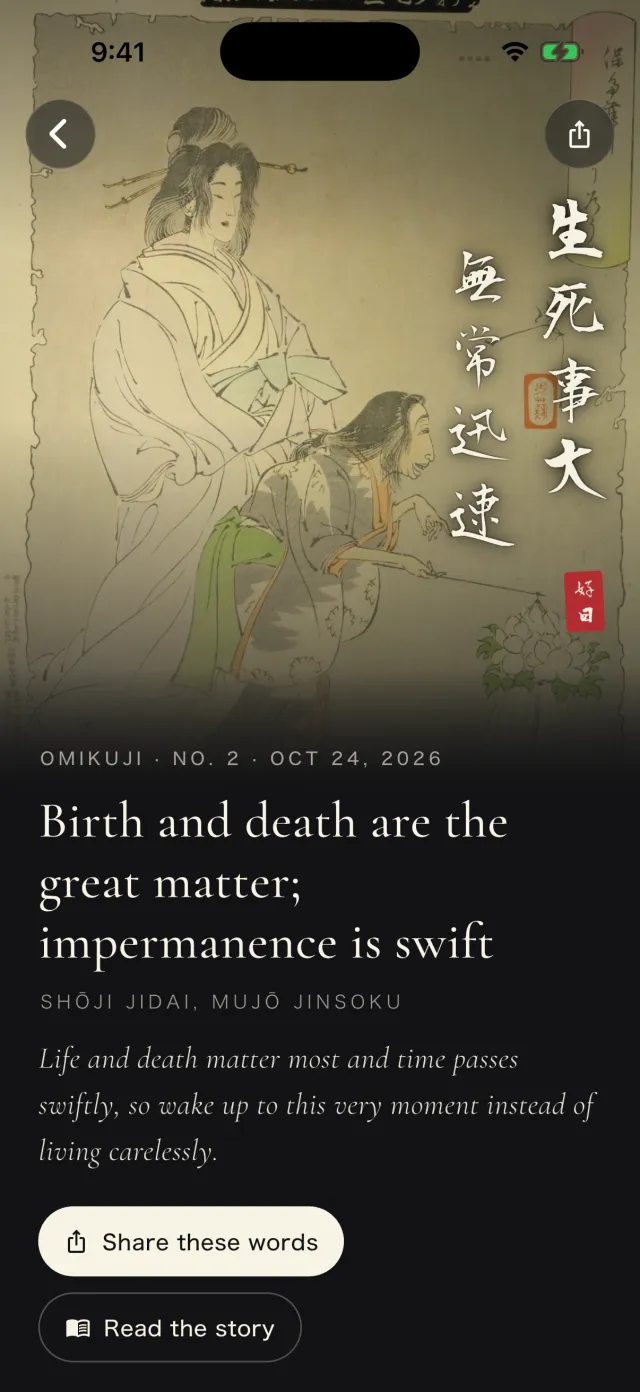
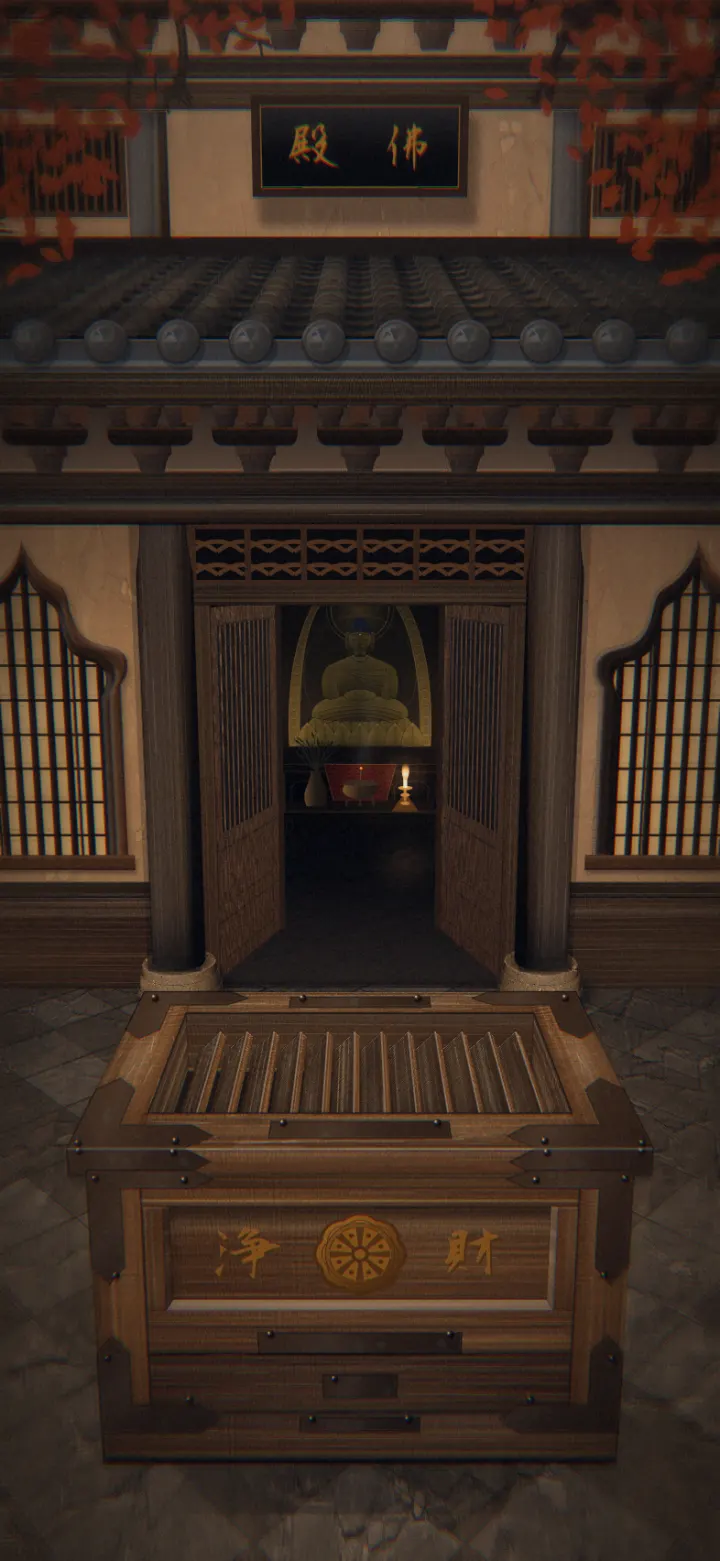
Today’s phrase · Zen in Ukiyo-e
A bird calls, and the mountain grows deeper still
After a bird calls, the mountain feels deeper still: true quiet does not shut sound out but holds it unshaken.
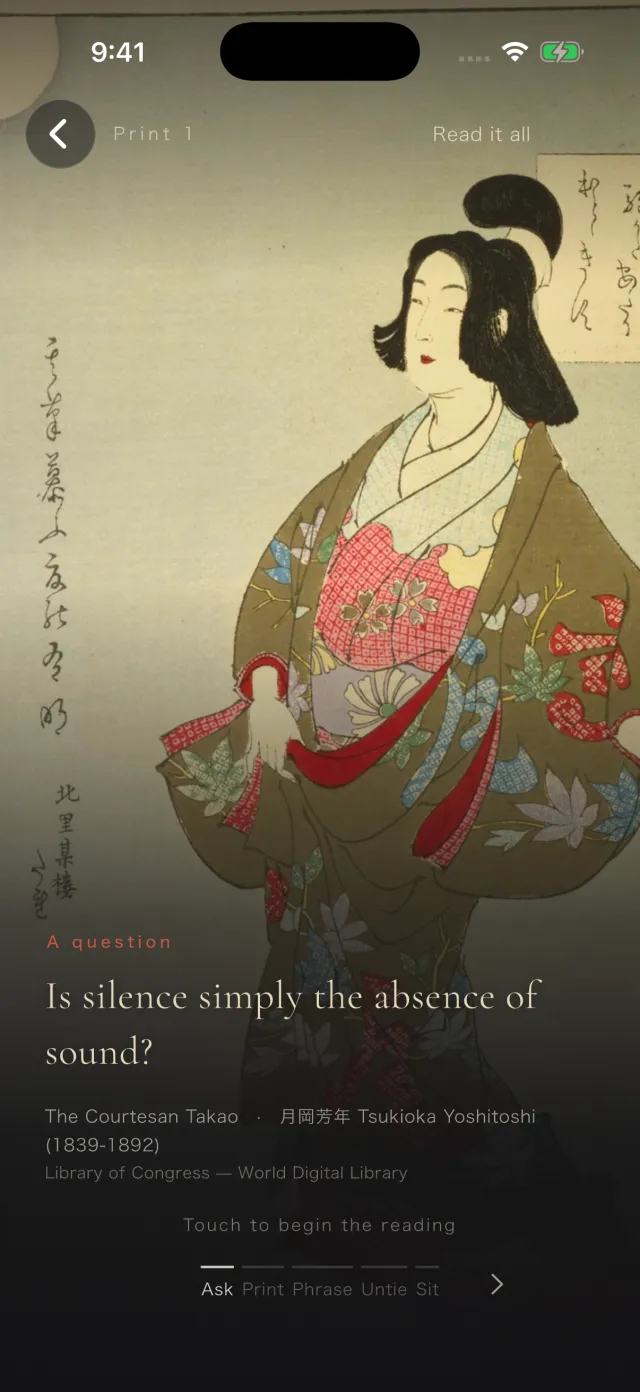
Is silence simply the absence of sound?
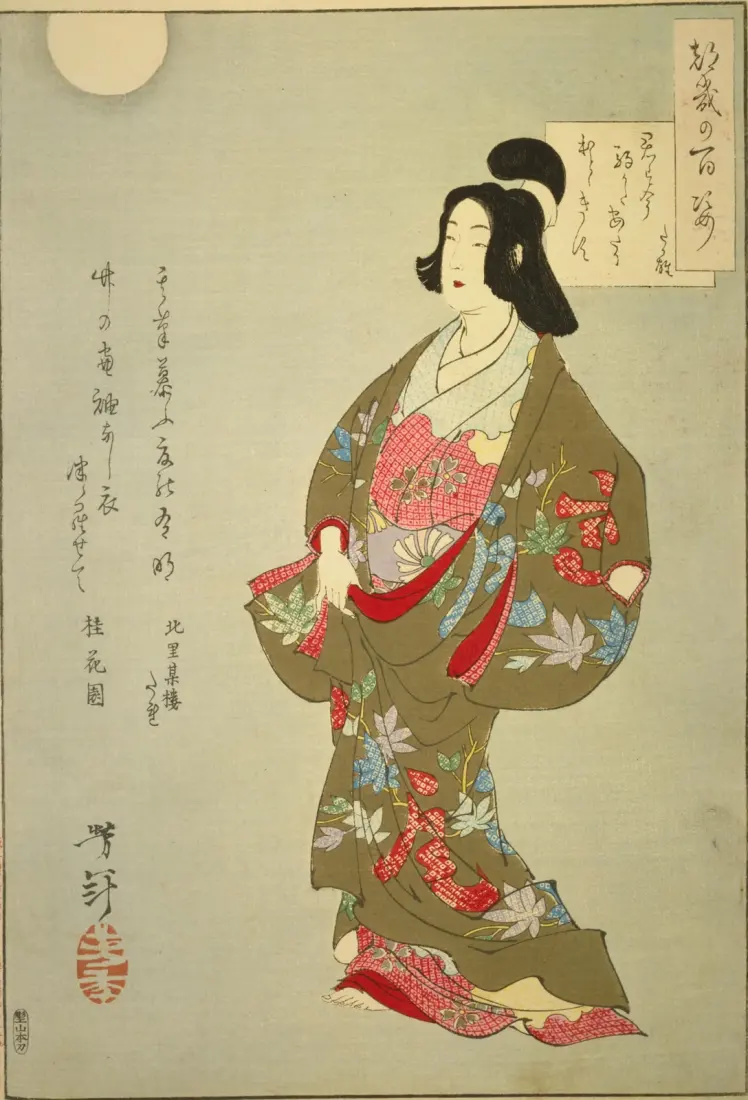
One hundred and thirty-six prints by Tsukioka Yoshitoshi, each paired with a Zen phrase. A reading in five steps: a question, the picture, the phrase, an untying — and then you sit.
The phrase on this page changes with the date.
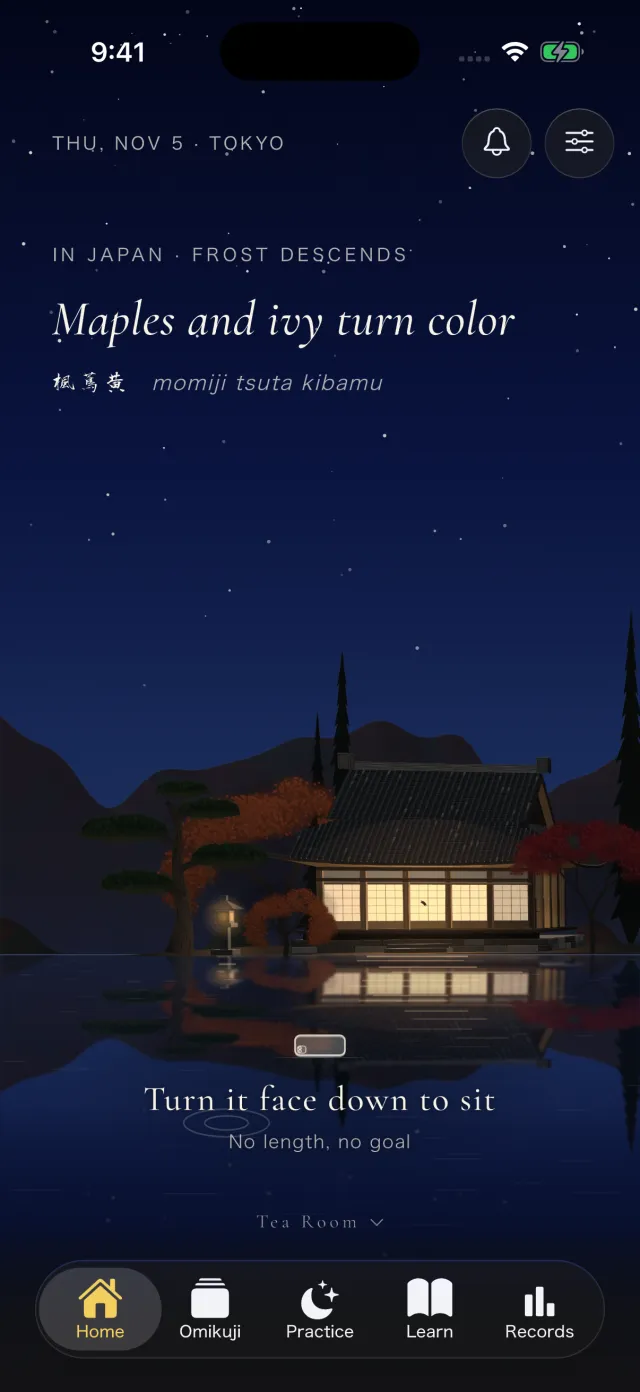
楓蔦黄
Calendar and sky · Frost Descends
Now — Maples and ivy turn color
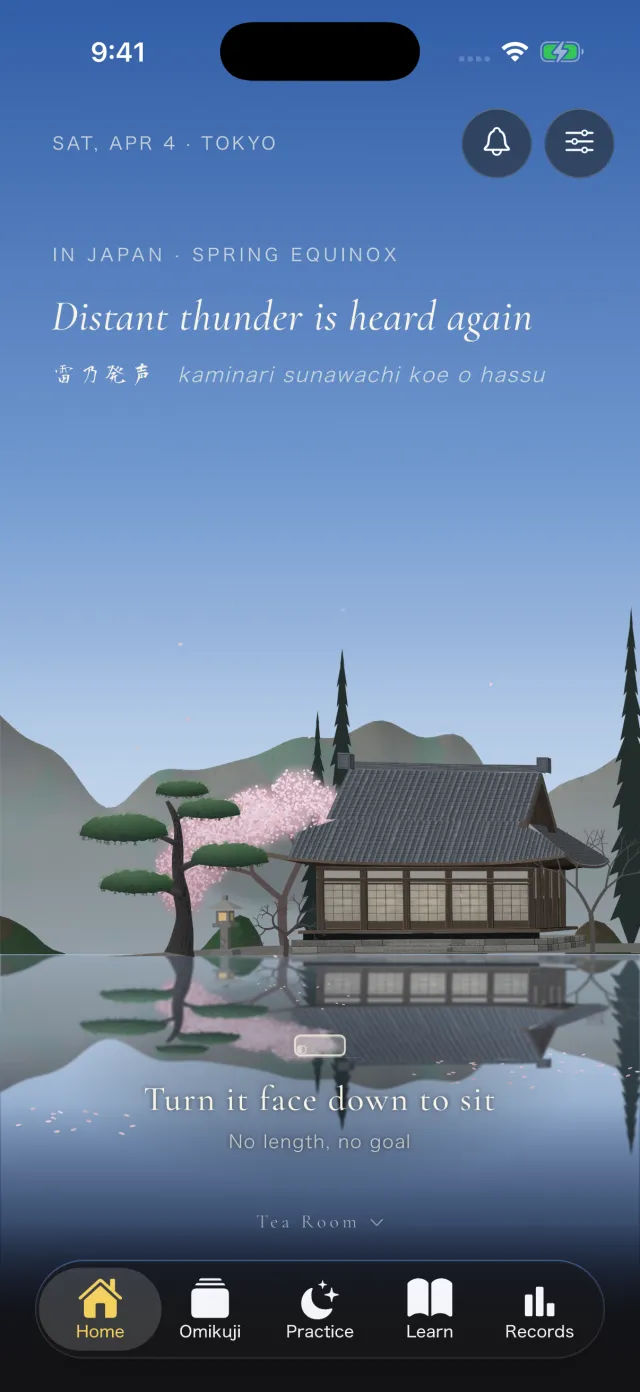
The temple on the home screen turns with Japan’s calendar, while its sky brightens and darkens with the sunrise and sunset where you are. The 72 seasons change every five days.




Daily paths
You don’t need a fixed hour. From three morning breaths to a season-long ango, every path moves only one step a day — and a day you rest is simply a day you rested.
Morning · 30 seconds
Three breaths in the morning. The sun clears the ridge, and one of a hundred dots lights up.

7 days · 30 days
From posture to counting the breath, listening, and just sitting — waxing like the moon.

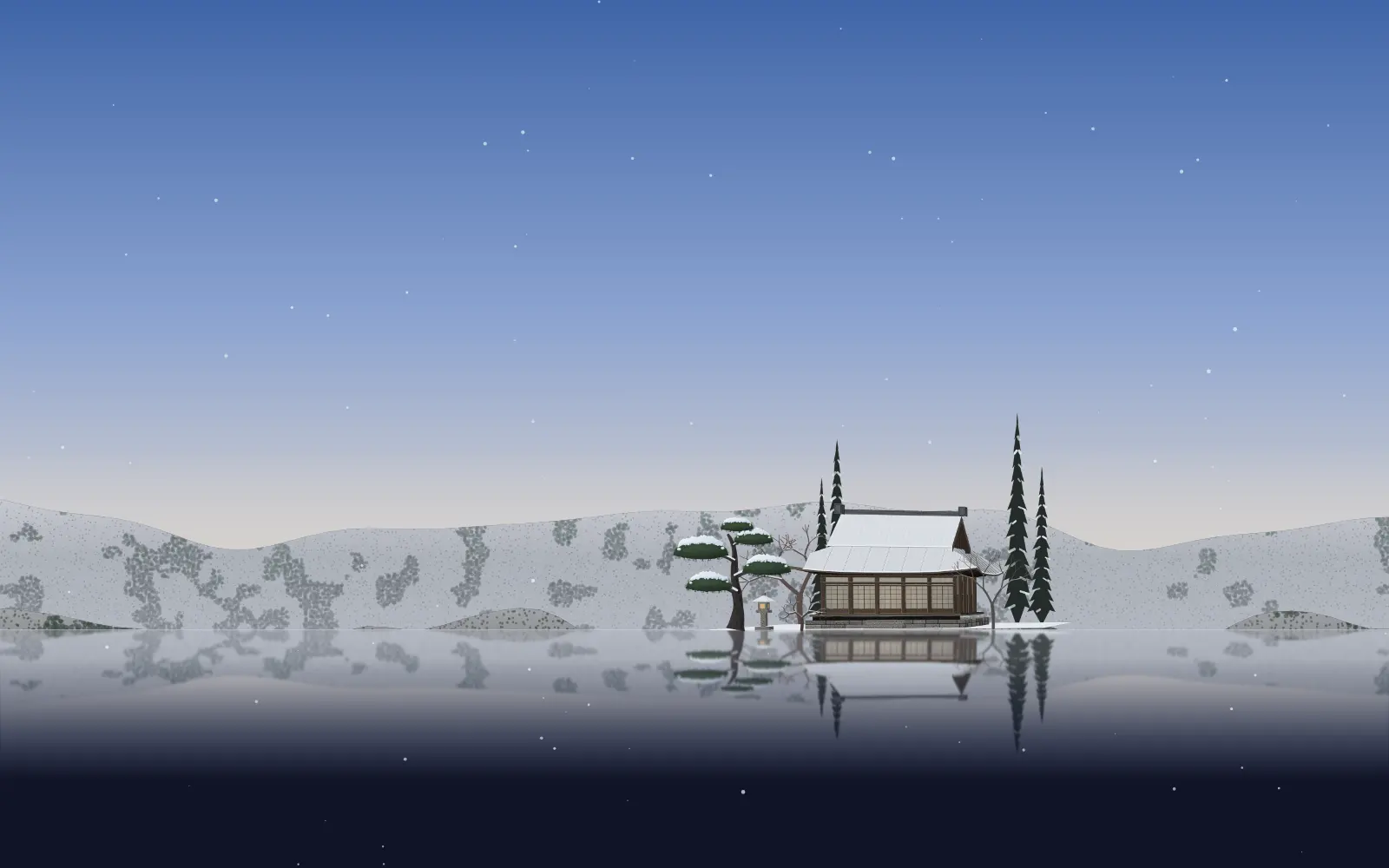
Night · 21 nights
From evening zazen straight into sleep, as a night over the lake slowly darkens.
One season
Sit morning and evening through a Zen monastery’s practice season. Four open each year.
Eight themes — contentment, letting go, fear, anger, impermanence and more. Sit carrying one print and one phrase.
New Year’s Eve bells, Bodhi Day, Nirvana Day, Higan, Obon and moon viewing — each open only on its days.
Rain and streams, sea and lake, wind, forest and birds, insects, fire and hot springs: six rooms, forty-six places.
The Shikoku pilgrimage
1,106 km
Every minute you sit carries you 300 metres along the real pilgrim road — from Temple 1, Ryōzen-ji, to Temple 88, Ōkubo-ji.
Nothing to press. When you sit, you walk.
Records
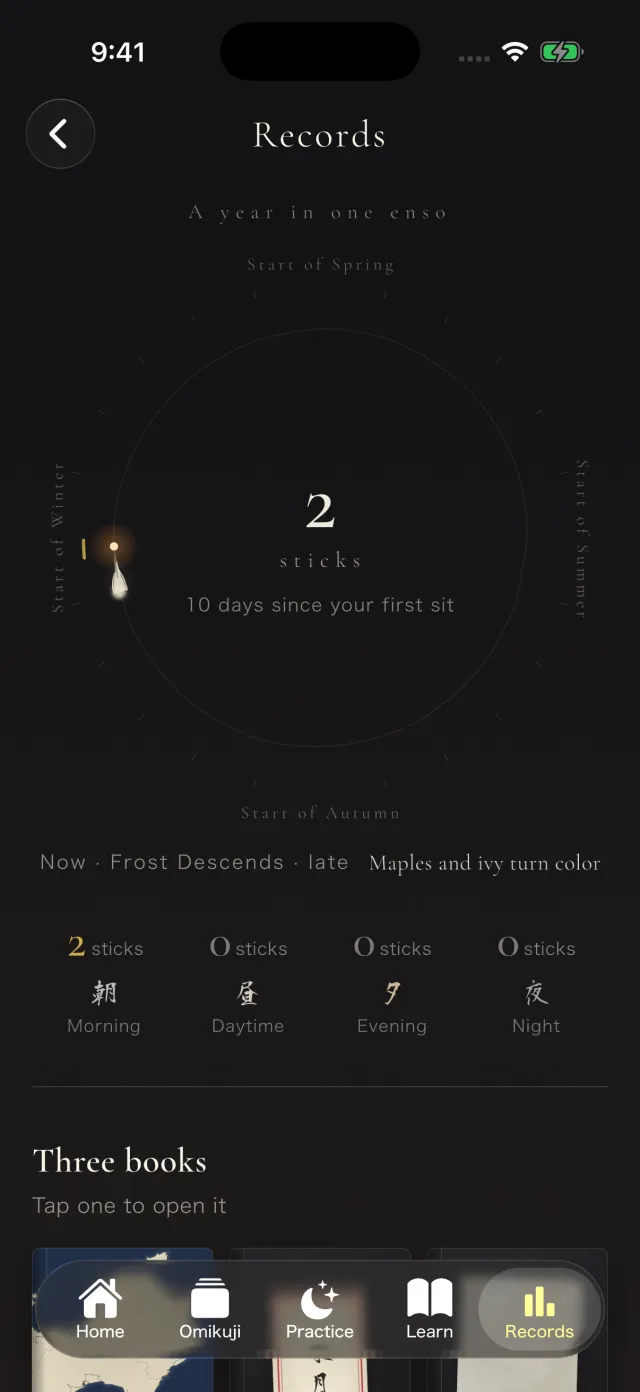
Each day you sat is bound into a book: the year’s ensō, the road walked, the omikuji ledger, the goshuin book. No scores, no rankings.
Who makes it
We travel to each place and record sound and photographs at the same spot — and keep a record of where every sound was made.
The prints are public-domain originals, shown unaltered and credited to the institutions that hold them.
Narration of Zen in Ukiyo-e by a priest of the Rinzai school is in preparation.
Temples, towns and museums: to talk about recording or featuring your work, write to support@ki-japan.app.
Ki is getting ready for the App Store on iPhone, with the first fourteen days planned to be free. An Android version is in preparation.
App Store · Coming soon